Cabinet Design for Historic Homes: Period Hardware and District Compliance
Remodeling a historic home's kitchen is a different discipline than updating a modern one. The design has to work within the character of the house — the proportions, the materials, the way the rooms were originally conceived — while delivering everything a modern kitchen requires. This is written for homeowners around Birmingham, AL who are looking into custom cabinetry project timeline and want the honest version rather than a sales page.
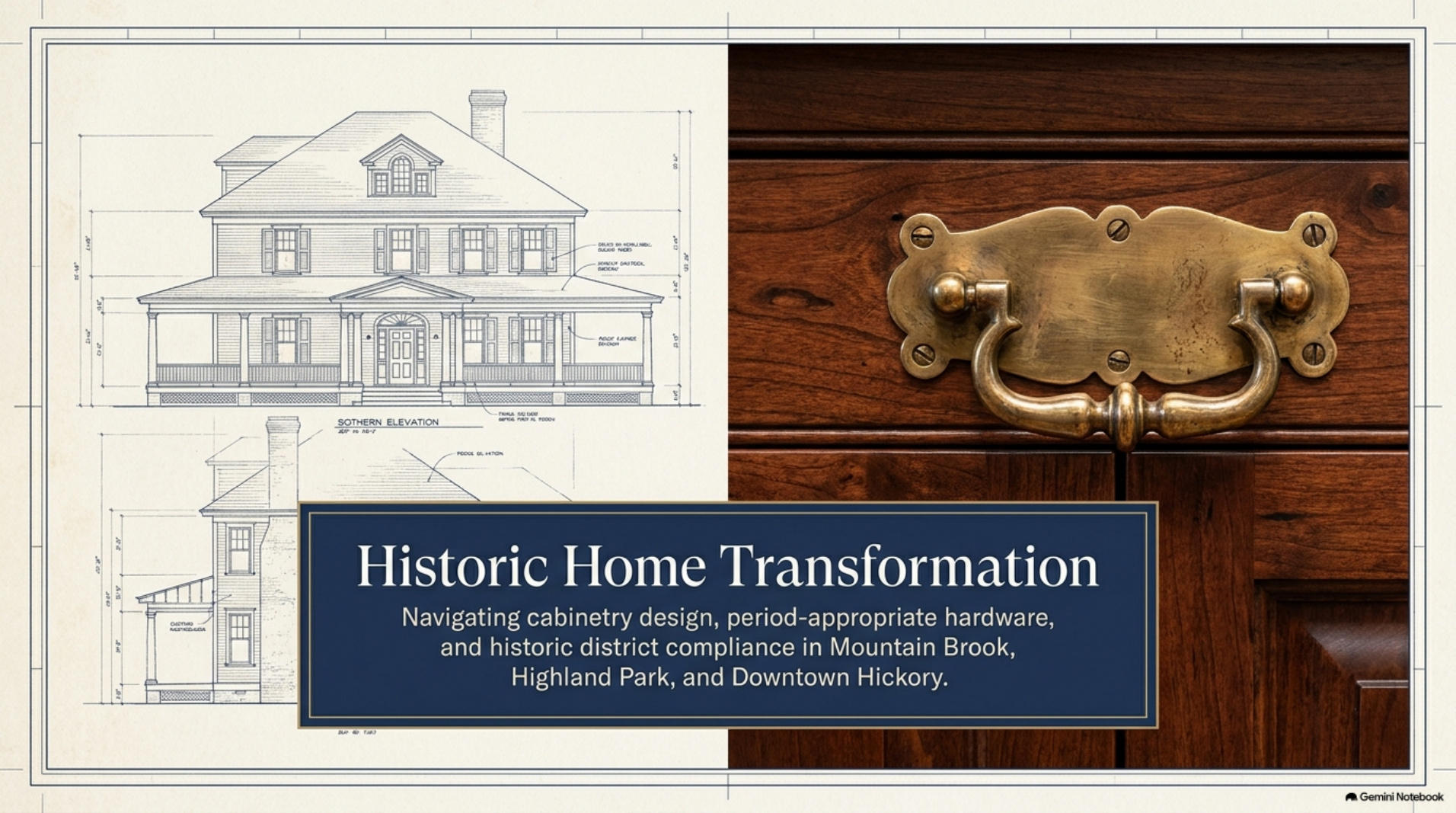
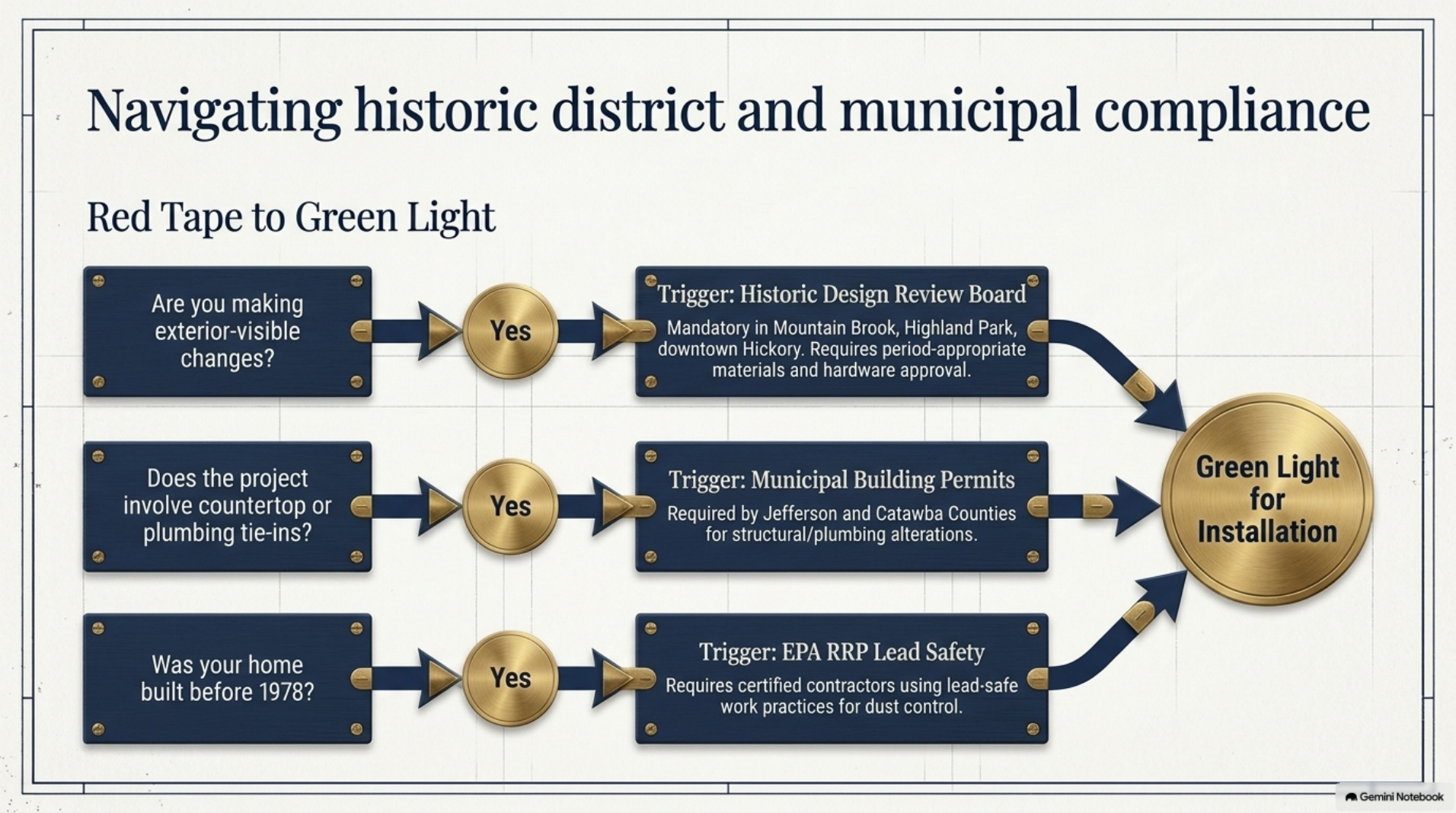
The two disciplines that make or break historic kitchen work are period-appropriate hardware and district compliance. The hardware has to carry the visual language of the home's era — the right profiles, finishes, and mechanisms — while the renovation has to satisfy the historic district's review process, which often governs everything from cabinet door style to visible trim detail.
The short version
- The article says remodeling a historic kitchen is a different discipline because the design must work within the house's proportions, materials and original room intent.
- It names period-appropriate hardware and historic district compliance as the two disciplines that make or break historic kitchen work.
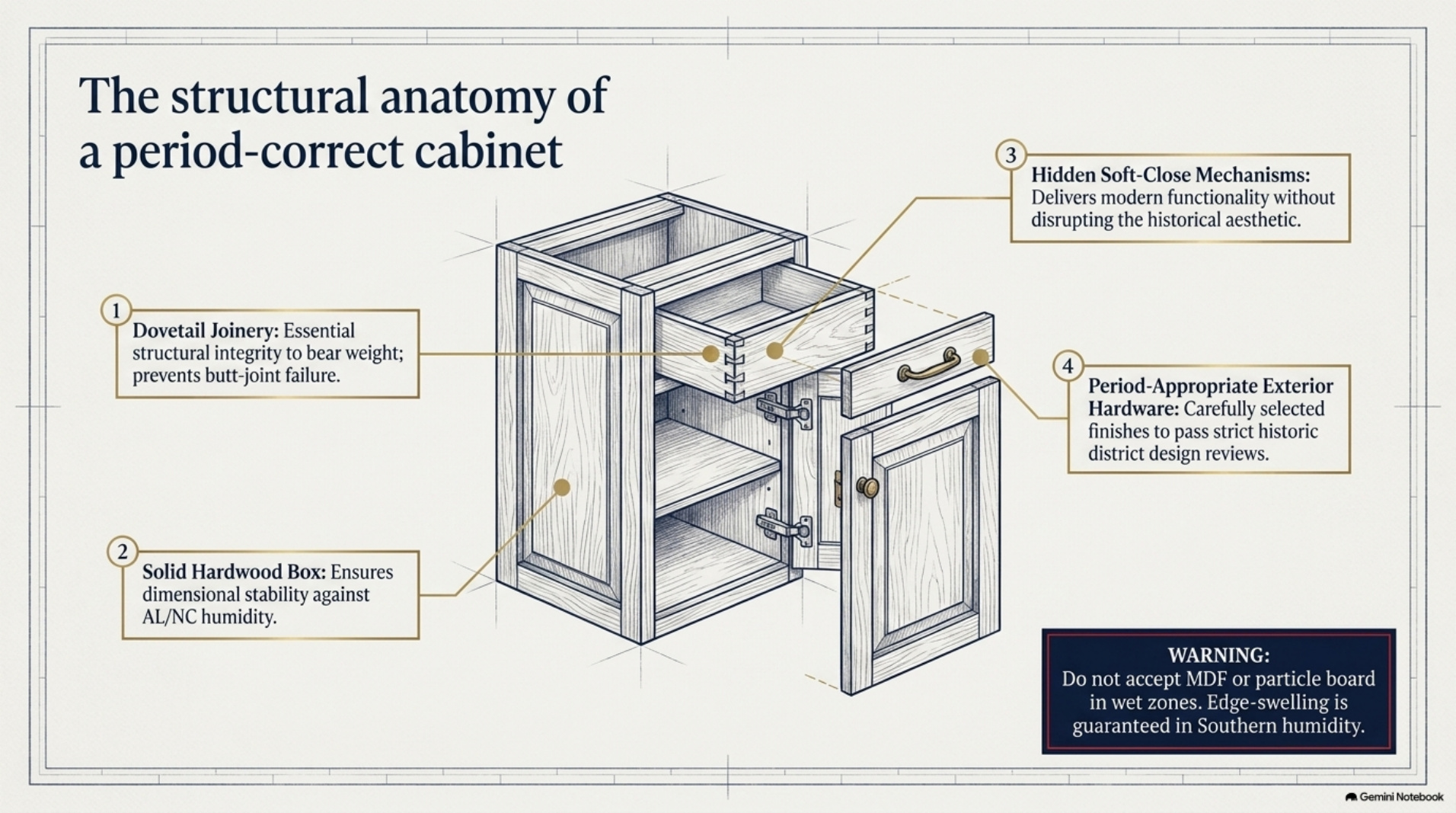
- Hardware has to carry the visual language of the home's era through the right profiles, finishes and mechanisms.
- The district review process often governs everything from cabinet door style to visible trim detail, not only major structural change.
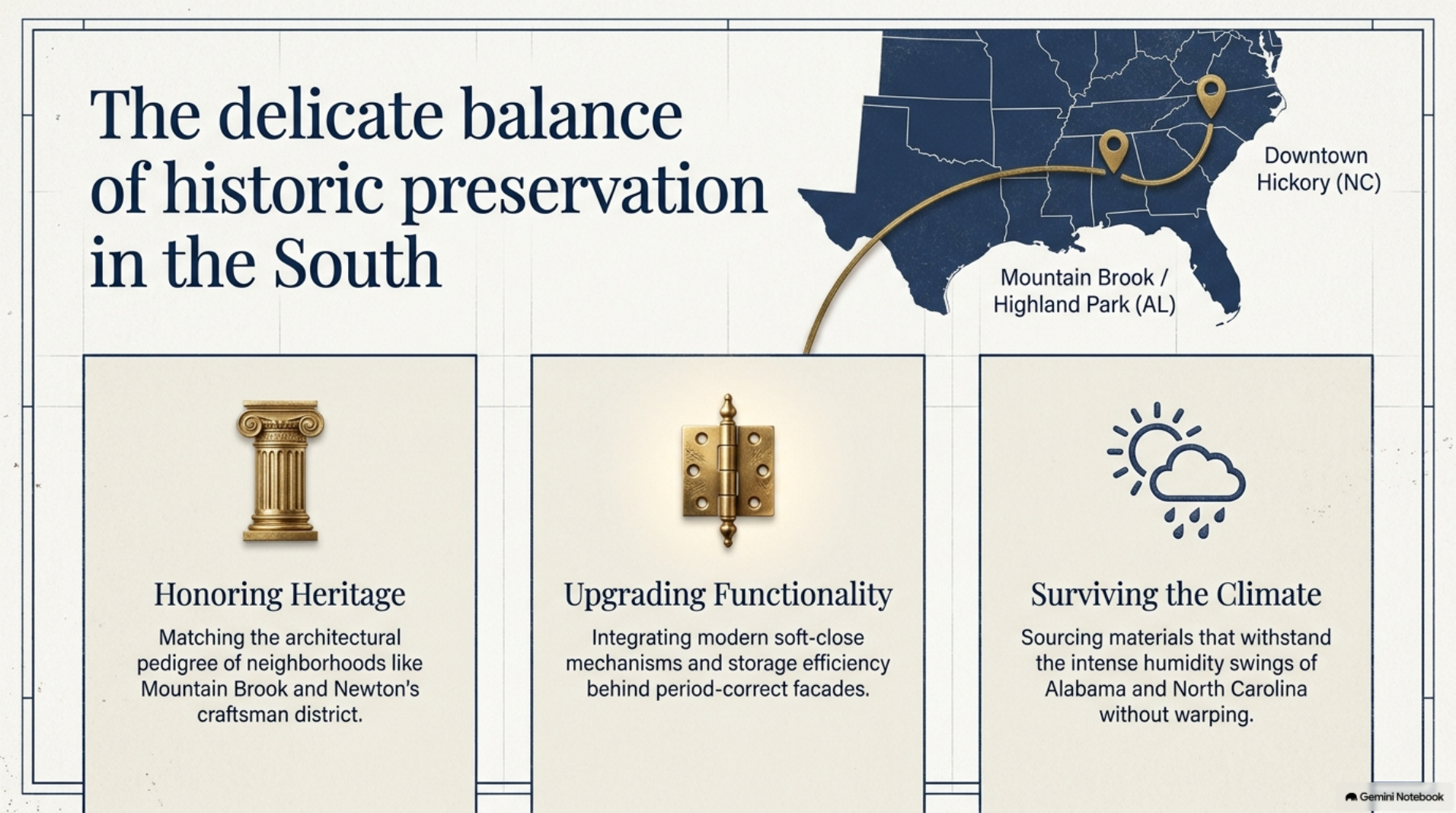
- Case studies from Mountain Brook and Downtown Hickory are cited as showing that good historic remodels hide the seam between old house and new cabinetry.
The case studies in the guide — from Mountain Brook to Downtown Hickory — show the same lesson: the best historic kitchen remodels are the ones where you can't tell where the old house ends and the new cabinetry begins.
Ready for a Professional Review?
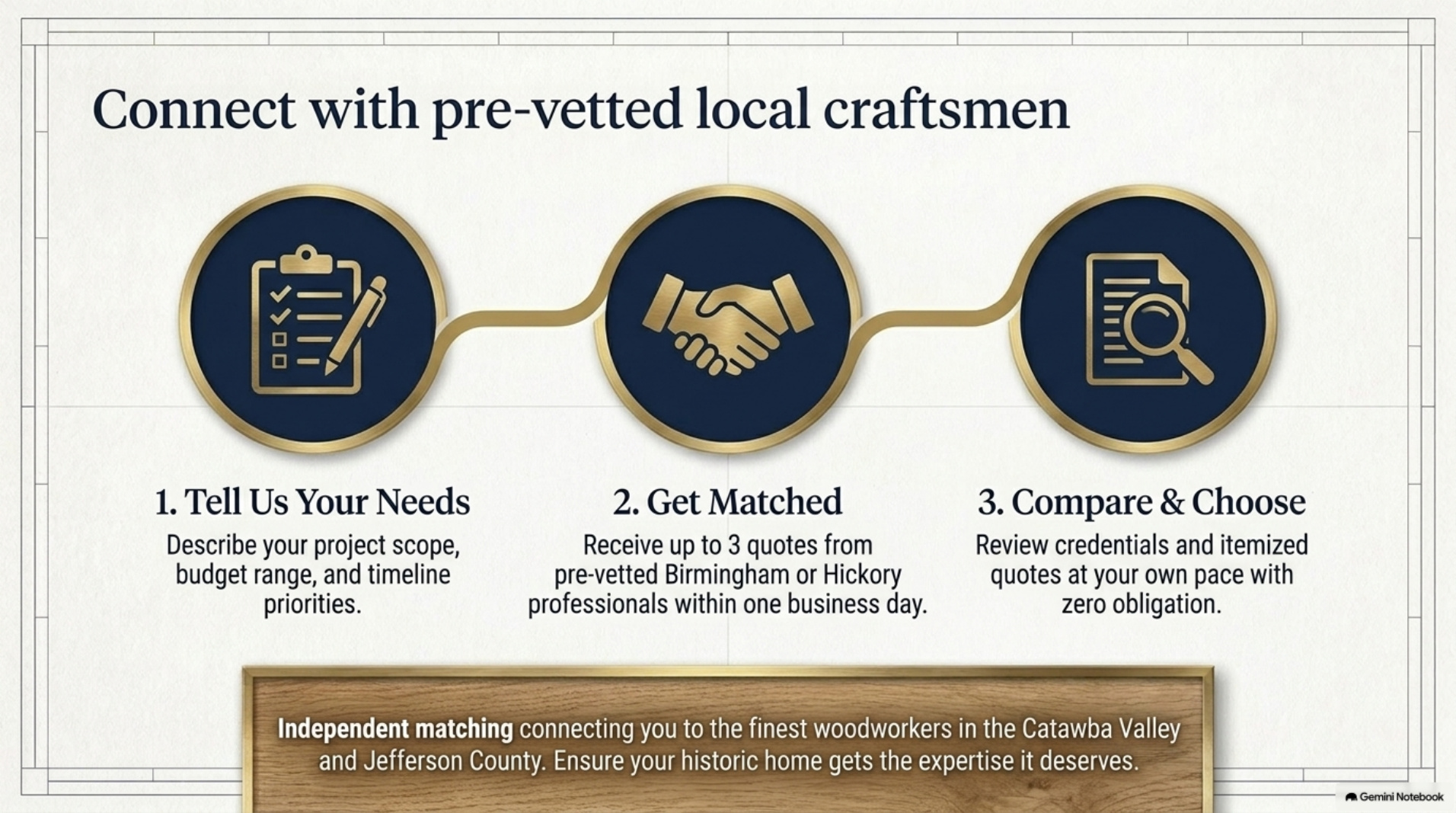
We can connect you with vetted local professionals who work on projects like yours.
Get Matched with Local Pros